
Phone calls remain one of the most effective ways to contact members of Congress. For nonprofits and associations, click-to-call advocacy campaigns make it simple to mobilize supporters and connect them directly with their elected officials.
If you are exploring how to run a call-to-Congress campaign or evaluating click-to-call advocacy software, this guide explains how it works, why it matters, and what to look for in a platform.
What Is Click-to-Call Advocacy?
Click-to-call advocacy is a campaign tactic that allows supporters to contact their members of Congress by phone through a simple online tool. Advocates enter their information, click a call button, and are connected directly to the correct congressional office.
Instead of asking advocates to search for phone numbers or navigate congressional websites, a click-to-call tool:
- Identifies the correct lawmakers based on the supporter’s address.
- Prompts the supporter to confirm their phone number.
- Connects the call directly to the congressional office.
- Provides optional talking points to guide the conversation.
This process reduces friction and increases participation, especially during time-sensitive legislative moments.
Why Call-to-Congress Campaigns Work
Congressional offices track constituent communication closely. During key votes or policy debates, phone calls often receive special attention because they indicate active engagement.
A coordinated call-to-Congress campaign can:
- Signal urgency during a legislative vote
- Demonstrate organized grassroots support
- Complement email and petition outreach
- Strengthen relationships between constituents and lawmakers
While emails are important, phone calls require real-time participation, which often makes them stand out.
How to Run a Click-to-Call Campaign for Congress
If you are planning a grassroots call-in campaign, follow these core steps:
1. Define the Legislative Moment
Identify the specific vote, bill, or policy moment where your advocates’ calls will have the most immediate impact.
2. Craft a Clear Call to Action
Use direct language such as:
- “Call Your Representative”
- “Call Your Senator Today”
- “Tell Congress to Vote Yes on [Bill Name]”
Clear, direct action language removes confusion, shortens decision time, and gives supporters confidence that they know exactly what to do ultimately leading to higher participation rates and more completed calls.
3. Provide Talking Points
Give advocates 3 to 5 clear, flexible talking points they can lean on for guidance, such as the bill number, the core message (“vote yes” or “vote no”), a short impact statement, and a personal angle they can share.
Frame these as prompts or themes rather than full sentences so supporters can put them into their own words. Avoid creating word‑for‑word scripts for your advocates, which can sound robotic to staffers and make callers less comfortable or authentic during the conversation.
4. Make It Mobile-Friendly
Many supporters will take action on their phones, often from a social post, email, or text message. A seamless mobile experience is critical, which means your click-to-call page should load quickly, display clearly on small screens, and make it easy to enter an address, confirm a phone number, and tap a single button to start the call without pinching, zooming, or navigating multiple pages.
The fewer steps a supporter has to take on mobile, the more calls your campaign will ultimately generate.
5. Track Participation
Track call volume, completion rates, and engagement trends over time to understand how effectively your campaign is driving constituent outreach. Then, turn those metrics into clear, accessible internal reports that highlight impact, guide strategic adjustments, and make the value of your advocacy work easy to see for leadership and key stakeholders.
A platform like Muster gives you access to these call tracking analytics.
What to Look for in Click-to-Call Advocacy Software
If you are evaluating click-to-call platforms for nonprofits or associations, consider whether the solution:
- Automatically matches advocates to the correct congressional offices
- Optimized for mobile devices
- Allows customizable talking points
- Provides real-time and post-campaign reporting
- Integrates with broader grassroots advocacy campaigns
The goal is not just to place calls, but to remove as much friction as possible for supporters to act at critical moments.
How Muster Supports Call-to-Congress Campaigns
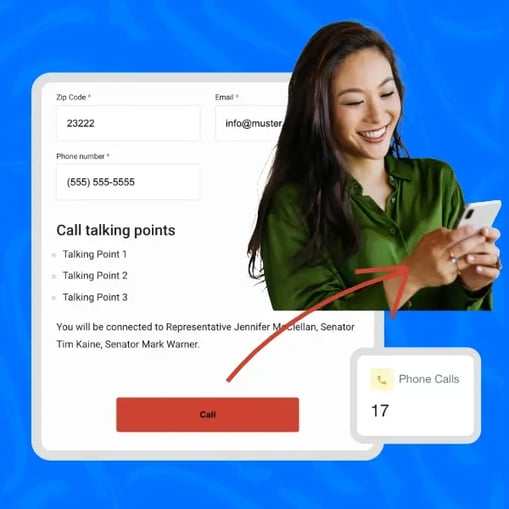
Muster provides a click-to-call advocacy platform designed specifically for nonprofits and associations engaging Congress.
Organizations use Muster to:
- Launch call-to-Congress campaigns quickly
- Connect supporters directly to the correct elected officials
- Provide helpful prompts without scripting conversations
- Track participation data to understand engagement
- Integrate phone-based outreach into broader grassroots advocacy efforts
Rather than adding complexity, the focus is on helping organizations reduce barriers and activate supporters efficiently.
When to Use Click-to-Call in Your Grassroots Strategy
Click-to-call campaigns are most effective:
- Before a scheduled vote in the House or Senate
- During committee hearings
- When responding to breaking legislative developments
- After a supporter has already signed a petition or taken digital action
Used strategically, click-to-call can move supporters from passive agreement to direct engagement by turning a quick digital interaction into a live conversation with a lawmaker’s office. Instead of simply sending an email or signing a petition, advocates take an immediate, higher-impact step that clearly signals their position and demonstrates they are willing to show up, speak up, and be counted when it matters most.
Frequently Asked Questions About Click-to-Call Advocacy
What is a call-to-Congress campaign?
A call-to-Congress campaign mobilizes supporters to phone their elected officials about a specific issue or vote, typically during a time-sensitive legislative moment.
Are phone calls to Congress effective?
Yes. Congressional offices track call volume and sentiment, particularly when a vote is approaching. Coordinated calls can signal strong constituent engagement.
How do nonprofits run click-to-call campaigns?
Nonprofits typically use a click-to-call advocacy platform that matches supporters to the correct lawmakers, connects the call, and tracks participation data.
What is the best click-to-call advocacy software?
The best platform is one that simplifies the process for supporters, integrates with existing advocacy efforts, and provides clear reporting for staff.
Can click-to-call campaigns work with email advocacy?
Yes. Many organizations use click-to-call as a follow-up action for highly engaged supporters or during moments that require immediate feedback to lawmakers.